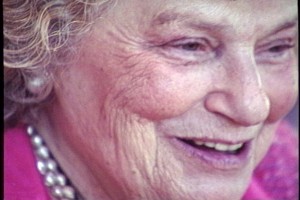

Tales of Viola Spolin:
How Viola Spolin Helped Me Overcome
Self-Pity
“Poor me. Nobody loves me.” Underneath my
cheerful façade, underneath my very well developed sense of humor, I walked
around Hollywood with that deeply embedded in my soul. I was working as a
bartender, ministering to and medicating others’ pain with banter and booze
while chasing the dream of being an actor in LA along with thousands of others.
My story is typical: I was the product of a childhood
filled with family dysfunction - family chaos: Parents who did their best, but
were totally unequipped to bring up a child with love and kindness. Instead,
they were angry, spiteful and self-involved children themselves, who had created
a family before they knew what they were doing. They resented the fact that they
were now saddled with children and responsibility. They raised me and my brother
and sisters with anger and resentment. How could they not? My childhood sucked.
They loved me in their own way I guess, but as a child, I couldn’t see it.
Poor me.
As I grew up, I wanted to be an actor. I wanted to get
out of my own life and into another, more interesting life. I wanted to be
someone else and be rewarded for it with fame and love. That was my goal. A
misguided motive for the theater, but there you have it.
When I arrived in Hollywood, I took acting classes and
improv workshops - the usual regimen beginners do when starting out. I was a
terrible actor. I was amateur and awkward and had no clue what the art of acting
was really all about. Still, I was determined to make myself an Actor –
capital “A”.
Things changed when I found myself in Viola Spolin’s
ongoing Wednesday afternoon theater games workshop. (See the article: How I met
Viola Spolin)
We went through many hours of different kinds of games
and exercises in that first year. I did my best, but felt frustrated by much of
it. I looked at the others in the workshop who seemed to do good work and envied
their talent. They are really good actors, I thought. I am not.
“You’re trying to act,” Viola said to me.
“You’re acting your head off! Don’t you see that? – It’s not about
acting out or imitating. It’s about YOU being there! YOU! Not some idea of how
you should be. That’s in your head!”
Intellectually, I knew what she was talking about, but
had no clue how to avoid it. I reflexively had to ‘act’. I was in my head. I
was not about to analyze my underlying problems (of which I was hardly aware
anyway). Nor was Viola. She would often say, “This is not psycho-drama. I’m
not interested in your personal emotions. I want to see the emotions and actions
of the scene. Don’t work out your personal problems on my
stage.”
No, my personal problems were my own cross to bear. I was
busy covering up my feelings of inadequacy with humor and charm. (I’m sure I
was not alone in this. If this rings a bell with you, dear reader, read on.) I
thought, “That’s what you do in improv – use wit, humor and charm. Try to
act like those others you see and admire.” Fake it, in other words.
We met once a week at the Cast Theater on El Centro
Street near Melrose. It was a small 99-seat theater a few blocks away from
Paramount studios. Ah, Paramount - it seemed to me a monolithic ivory tower of
success that I would never penetrate, acting-wise. Maybe I could get a job there
in the cafeteria or something. Poor me.
Week after week Viola witnessed my struggle to do good
work in her class. Sometimes she would yell at me “What am I going to do with
you?” I was tempted to ask ‘what should I do, then?’ But I knew better.
You never asked “how to” in Viola Spolin’s workshop. Viola was all about you
figuring it out. If you asked ‘how do you want me to do it?’ she
would blow up at you. “I DON’T KNOW! I’m not the answer book!” she would
shout. No, with Viola, it was all about getting out of your head and into the
body, into the space and making these discoveries on your own. All she would do
is point out when you weren’t doing it and when you were in your head. I did
scene after scene, exercise after exercise but could not understand what was in
my way. If Viola knew, she wasn’t telling me.
I’d leave class some days so frustrated. I can’t act.
Who am I kidding?
Over the year, Viola and I had become friends. (See
“How I met Viola Spolin”) and I usually sat next to her while she coached.
She could get such incredible scenes out of so many of us. My work was still
pedestrian – nothing special, nothing to write home about, but I was there,
man. –
We did an exercise called Intensify Emotion, a game where
the sidecoach, in this case Viola, watches a scene between two players and calls
on them to heighten and intensify the emotions that emerge for each player out
of the playing. If one actor is feeling happy and the other is doubtful, she
would coach each respectively to heighten that feeling. Viola would call out to
the players, “More Happy!” “More! Even more happiness!” “ Feel
happy in your chest!” – (to the other actor) “More doubt!” “More!”
“Put the doubt in your face! In your fingers!” “More! - Heighten it!”
What began to happen to the players onstage was amazing,
funny, exciting and wonderful. Happy turned to joy. Heightening joy became
hysteria, hysteria morphed into giddiness and so on. Doubt turned to concern, to
worry, to panic, to fear, to terror, etc. Intensifying Emotions created
transformation. It was absolutely astounding to see such emotional energy move
the players in such surprising ways. Great theater.
Now it was my turn. I was paired with a very attractive,
sweet woman named Susan. We chose a scene (who, what and where) that had a good
emotional starting point. A scene we knew had built-in emotional potential for
both of us. We were in a prison meeting room, separated by a glass window, with
phones on either side. I was the prisoner and Susan was my wife coming to break
the news that she had fallen in love with someone else. Oh, this was juicy.
The scene began:
Me: Hi honey. (with love) Gee, I missed you.
Susan: (tentative) Hi Gary.
Viola: (to me) Heighten glad to see her!
Me: (sensing something wrong) What is it,
darling?
Susan: (eyes downcast) I… I…
Viola: (to Susan) Heighten that feeling! Put it in your
shoulders!
Susan: (Crying)
Me: What’s wrong?
Viola: Concern! Heighten concern!
Me: What is it, honey? What’s happened?
(deeply concerned)
Susan: I’m in love (still crying) with
someone else. I don’t love you any more.
Me:
What?? (I have a look on my face of bewilderment and shock. I get a sinking
feeling in my stomach.)
Susan:
I’m so sorry, honey. I’m so, so sorry. It just happened. I’ve been seeing
him for months now… We fell in love.
Me: (crestfallen) Oh.
Viola: (to me) Heighten that feeling! Put it in your
stomach, throat, face!
Me: I see… (Completely numb, shocked, sad)
Now I almost stop hearing Susan and what she
is saying. All I begin to hear is Viola’s coaching to me.
Viola: (to me) Intensify it! Put it in your chest!
My shoulders slump. I look down at my feet. I bow my
head. I think to myself, ‘No one loves me. Poor me.’
Me: Of course, this is what I get, what I
deserve. Shit, why does it always have to be me?’
Viola: More! MORE!
I begin to feel sick to my stomach. “Poor me” is
coursing through my whole body. I can’t even look at Susan who, I imagine,
Viola must be coaching too, but I am too involved now with my own pity to
notice.
Viola: More! EVEN MORE! Put it in your nose! Your eyes,
your legs!
INTENSIFY IT!
I am covered in self-pity.
Viola: Heighten the self-pity! Poor me! Say it in your
feet! Put it in your spine! C’mon, even more! Heighten it!
I am revulsed by self-loathing. I begin to feel exposed.
Naked. The whole class is watching this. Seeing me – the real me. I am no
longer playing a prisoner in a cell talking to his wife. I’m me and I’m the
only one who feels sorry for myself in the whole wide world. I am so sorry for
myself I could puke – literally.
I feel so ashamed. Everyone is seeing me like this. My
true self - Oh, god, I am so ashamed. I can’t stay here. What am I doing here?
I can’t act. Now everyone knows it. I slowly get up. I don’t look up; my
eyes are glued to the floor.
The cell window is gone. The phone is gone. The scene has
dissolved. I am not in the scene anymore. Susan, I think, is still in the scene
playing my wife, I don’t know. Maybe she’s just gawking at me like everyone
else.
I have to get out of here. I begin to walk across the
stage floor, slowly, deliberately. If I run I am a coward, but if I walk I might
be able take the last shred of dignity I possess with me. “Don’t work out
your personal problems out on my stage!” Viola’s words echo in my head.
I make it to the door. I walk out.
Viola: COME BACK! Come back!
I open the door into the bright, sunny afternoon. It is
such a contrast to the dark little theater space, but it is a dull, lifeless
bright. The sun cannot penetrate my despair. I get in my car and drive home. I
have no thought; I just drive like a zombie. I get home. I lie on my bed. I am a
husk; dried up, empty. I have no feeling anymore - maybe a little residual of
shame, but it’s hardly worth mentioning.
Time passes, I couldn’t say how long, but it was the
same day.
The phone rings. It is Viola.
Me: Hello.
Viola: Gary! What were doing!?
Me: Viola, I had to leave. I couldn’t stay.
Viola: Oh, honey. If you had only stayed…if
you had only stayed -- I’d have cleaned you out of it!
Me: (listless) Yeah.
I hang up. I lie back on my bed. Soon, I begin to feel
unexpectedly better. I put my hands behind my head, look up at the ceiling. I am
pensive.
Lying there on the bed, I feel my body, my feet, my legs,
stomach and hands. They feel good. They feel new.
I have the distinct image that if I were being filmed,
the camera would be above me on a crane, slowly pulling back ever further to see
me; me on the bed; me on the bed in the room; me on the bed in the room in the
apartment; in the apartment in the building; in the city – in the world.
I feel good. I inspect my emotional self, still lying
there on the bed. I feel pretty good. No self-pity; No shame; No embarrassment,
even.
Hey! I feel pretty damn good! In fact, I feel terrific.
What is going on?
I’m hungry. I get up and go out.
I am going out to get something to eat. I’m alive and I
am hungry. I am an actor in Hollywood going out to get something to eat, because
I’m famished. I’ve got a career to go after. Hey, life is good!
Epilogue
Ever since that day I have never ever felt sorry for
myself. Viola’s coaching and the game itself banished that unproductive
emotion from my psyche forever.
Self-pity, many acting teachers will tell you, is the
poorest choice you can make for a character. It is an unpleasant emotion to
witness, an excuse for the self to stay hidden, a paralyzing emotion. Self-pity
keeps you from having any contact with the outside world and useless in real
drama. Useless in life.
Soon afterward I began connecting with my acting; going
on auditions and getting callbacks and some acting jobs. I still had a lot of
other emotional problems (who doesn’t?) but
self-pity was not among them.
Gary Schwartz,
August 2001 Door County, Wisconsin.
E-Mail at
ils@spolin.com