
|


|
 |
Improv: Where Did You Come From & What Are You
Doing in My Living Room?
From the Hollywood
Reporter Comedy Special Report.
January 26, 1988
BY BRUCE BEBB
The improvisational theater movement began in Chicago in the summer of
1955. A bunch of young people started a project called the Compass. Led
by a couple of young directors with offbeat ideas, David Shepherd and
Paul Sills, they put on shows that were different each night. Shepherd
wanted to work in a manner distantly related to the commedia dell'arte
of Renaissance Italy and France, doing topical satire without a set
script. Sills brought a background of years of playing theater games under
the tutelage of his mother, Viola Spolin.
Sills went on to form the Premise and Second City, which spawned the
Committee, which gave birth to such troupes as the Wing and the Synergy
Trust. Together these companies helped shape hundreds of' performers,
among them Mike Nichols, Elaine May, Alan Alda, Barbara Harris, Dick Schaal,
Valerie Harper, Del Close, Severn Darden, Stiller and Meara, Shelley Berman,
Joan Rivers, Lewis Arquette, George Segal, Howard Storm, David Steinberg,
Gilda Radner, Peter Bonerz, Henry Jaglom, Paul Mazursky, Robert Benedetti,
John and Jim Belushi, Robert Klein Ron Liebman, Shelley Long: Harold Ramis,
Avery Schreiber, Martin Short, Betty Thomas John Candy, Bill Murray, Carl
Gottlieb, Richard Libertini, Rob Reiner, Felton Perry, Howard Hesseman
and many, many more.
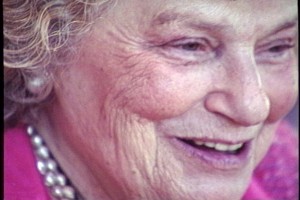
Sills' mother, Viola Spolin, didn't set out to foster any sort of, new
movement in the American theater, let alone one that would eventually
surpass Stanislavski's influence. ("The first time I met Viola,"
Howard Hesseman a former Committee member and current star of ABC's "Head
of the Class," recalls, "was after a show, and she told me she
liked my work. That was such a stroke it was like Zeus reaching down and
saying, 'You're pretty good.' ") Spolin started in the 1920s, working
with a Northwestern University sociologist, Neva L. Boyd, who founded
a school at Chicago's Hull House. According to Spolin, Boyd's teachings
provided "an extraordinary training in the use of games, story-telling,
folk dance and dramatics as tools for stimulating creative expression
in both children and adults, through self discovery and personal experiencing.
After the Depression hit, Spolin went from Hull House to a WPA payroll,
teaching theater skills to people who would, in turn, become teacher-directors
in neighborhood work. In the '40s, she moved to Hollywood, where she still
lives today. She established a group called the Young Actors Company and
continued to refine and expand her concepts and techniques for developing
stage skills. New ideas came out of practice, and a new vocabulary. For
years she used the method simply prepare actors for traditional stage
plays. Then, on a trip back to Chicago, she saw how her son wits using
theater games combined with suggestions from tire audience to create professional
entertainment.
Spolin had had a book drafted for publication for years. It took Second
City's success to prompt her to revise the manuscript into a final draft.
"Improvisation for the Theater," published by Northwestern University
Press, has since become the bible of the movement.
But it isn't the only force at work, and like; my classic it can be interpreted
from a variety of' perspectives. "The improv that is the way for
me is the idea of support," says Felton Perry, who performed with
Second City's touring company and later was a member‑ of the Synergy
Trust; today fie co-stars on ABC's "Hooperman. " Perry adds,
"It probably helped tire to deal with whatever kind of big ego I
would have had, you know, 'I'm a star, I'm a star.' It's the idea of',
'If I'm a sky, then I can be a star.' I can support. Once you've go (trust
going, and everybody feels good, you start going into areas that you never
would get 'into if you were operating off' of' that ego trip or star paranoia.
"
Perry says not all improvisers work according to Spolin's theories,
''I've been told, 'OK people, let's improv the scene,' and I'm ready to
improv as I've been taught with support, to give to the other person,
and a lot of times improv seems to a lot of people to be hostility. They
operate off Plenty of "Me-me-me.' What happens on stage will never
get past a certain point because there's not a whole lot of trust up there." Hesseman agrees. "I frequently find it disturbing, particularly in
Hollywood, " he says. "Over and over I see people sacrificing
a scene for the sake of maybe getting a job from someone who might be
out there in the audience. I see them trash a scene in order to get focus
for themselves to show how clever they are. They leave their fellow actors
in the lurch and the scene just sort of disappears. '' What has improvisational
training done for their work in television and films' "The awareness
that improvisation requires just seems to sort of form a checklist in
your head, '' Perry says. "You look around and check things off'.
Your awareness is heightened. Which makes what we're doing with the show
so great. You know Barbara Bosson (co-star of'' Hooperman') was with the
Committee. I just love to watch Barbara work, because the support makes
everything else possible."
Hesseman says the fundamentals carry through to all of his work. "One
value is the absolute necessity of learning to really listen when another
actor is saying something, and to really see what another actor
is doing in front of you. Allen Myerson (director of the Committee) used
to talk about being able to have a sensory impression of 360', all the
way around you. You gotta know what the actor's doing behind your back.
That stuff is really helpful, because it keeps attuning you to the myriad
possibilities that any moment offers you in life and as an actor.
"It was Viola's contention that rather than stand and act and emote
and indicate all of this stuff, that in life you generally have a task
at hand that you are trying to complete. In other words, we are really
doing something while we're talking to people, and our objectives
are not always right on the surface. With theater games training, you
start learning there are ways to free yourself so that there is some spontaneity
in what you do, and it's the truest you that is in the scene -- not some
concept of what people will like and what will get you a job if you do
this well."
The seeds planted by Viola Spolin, and by David Shepherd and Paul Sills,
went deep. Nobody can say just how far they spread, but the scores of
improv groups all over the country are their direct descendants, and many
of the best TV series, such as "Cheers" and "Barney Miller,"
are closely related as well. The ideas in "Improvisation for the
Theater" are not simply different from familiar notions; in many
cases they are contrary to hallowed educational practices. Anybody who
reads the book and tries to put its lessons to work will never be the
same.
From the Hollywood Reporter Comedy Special Report. January 26, 1988
|
|